Atari technical documentation
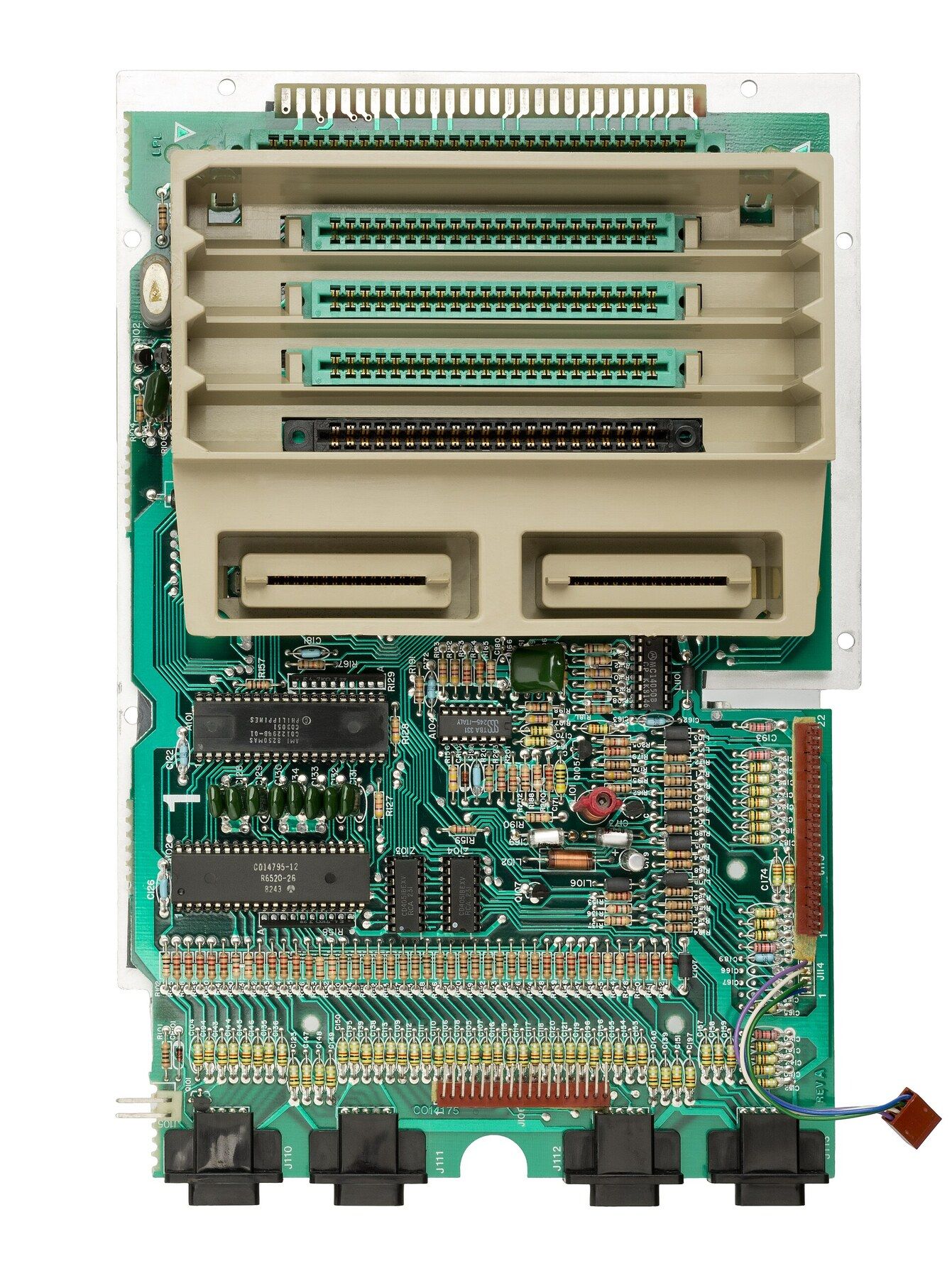
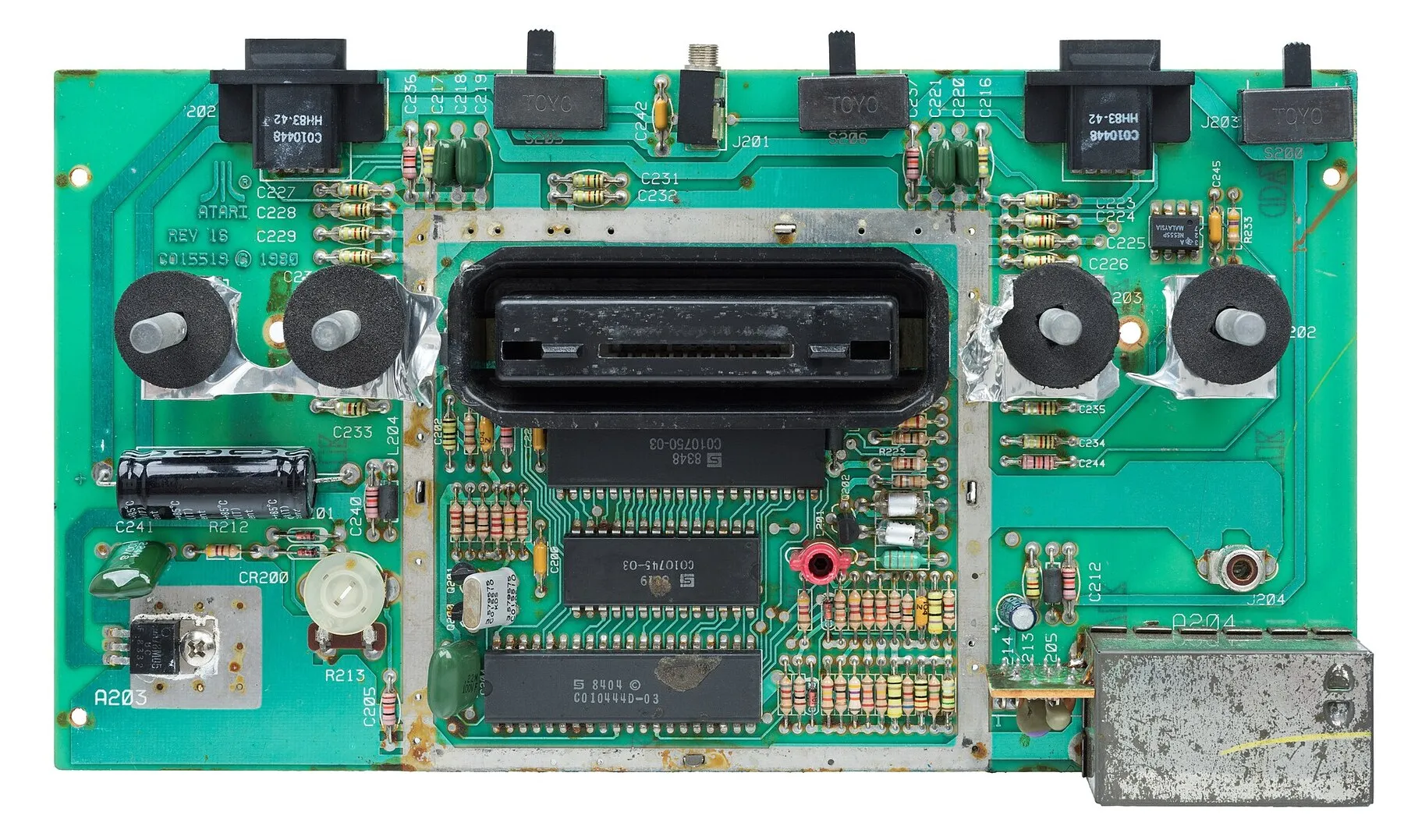
This page lists, machine by machine, the main chips inside each Atari console and computer from the 2600 to the Jaguar, and the period documents that describe them: field service manuals for repairs, programming guides and hardware references for writing software. Each document is given with its title as printed, its publisher and date, and a copy that can be read online. The site hosts no PDF files and no ROM images; every copy below is kept by an outside archive.
Old links to the technical documents archive that used this address (8-bit, 16-bit, arcade, games and miscellaneous sections, the PDF folder, the 850 notes, the ROM page and the 2600, 5200 and Lynx FAQs) now lead here.
Where the scans are kept
Most of the documents below come from four places. Atarimania keeps a “Technical Documents” list for each machine, including the 2600, the 5200 and the ST, TT and Falcon. The Internet Archive holds scans of books such as De Re Atari, Mapping the Atari and Atari ST Internals. AtariAge keeps the console FAQs and indexes of game manuals for the 2600, 5200 and 7800. The Arcade Archive covers coin-op manuals.
Atari 2600 (VCS)
| Chip | Role |
|---|---|
| 6507 | Processor, a derivative of the 6502; it runs at the 3.58 MHz color clock divided by three, about 1.19 MHz |
| TIA (Television Interface Adaptor) | Atari custom chip that generates the picture and the sound |
| 6532, called the PIA in the Stella guide | 128 bytes of RAM, an interval timer and two 8-bit I/O ports |
The Stella guide states the constraint that shapes every 2600 program: the TIA holds only the data for the line being drawn, so the processor has to rewrite it during the 76 machine cycles of each scan line, and game logic runs in the 70 lines of vertical sync, vertical blank and overscan.
| Document | Publisher and date | Read it |
|---|---|---|
| 2600 (Stella) Programmer’s Guide, by Steve Wright | Atari, Inc., December 3, 1979; updated by Darryl May, July 1, 1988 | Internet Archive |
| 2600/2600A VCS Domestic (M/N) Field Service Manual, FD100133 Rev. 02 | Atari, Inc., January 1983 | Atarimania, PDF |
| The Stella System Training Manual, Version 1.1, by Chris Powell | February 1983; no publisher on the title page | Atarimania, PDF |
Atari 400, 800 and the XL and XE computers
| Chip | Role |
|---|---|
| 6502 (part C014377) or SALLY (part C014806) | Processor at 1.79 MHz on NTSC machines and 1.77 MHz on PAL machines. SALLY, used in late 400/800 units and in every XL and XE model, adds a HALT line that lets ANTIC take the bus |
| ANTIC | Display processor that runs a display list stored in RAM, which it reads by direct memory access |
| CTIA or GTIA | Turns ANTIC’s output into the video signal; handles colors, player-missile graphics, collisions, joystick triggers and the console keys. Early NTSC 400/800 units have the CTIA, later ones the GTIA, which adds three graphics modes |
| POKEY | Keyboard scan, the serial I/O bus, sound, timers and the paddle inputs |
| PIA (6520) | Two 8-bit I/O ports |
| FREDDIE (C061922 or C061991) | DRAM controller in later 800XL units and all XE models |
Michael Current’s Atari 8-bit FAQ gives the part numbers above for each chip version, which helps identify the chips on a given board.
| Document | Publisher and date | Read it |
|---|---|---|
| Atari Home Computer System Technical Reference Notes, C016555 Rev. A (Operating System User’s Manual, Operating System Source Listing, Hardware Manual) | Atari, Inc., 1982 | Internet Archive |
| Atari 400/800 Home Computer Field Service Manual, FD100001 | Atari, Inc., June 1982, with revisions up to May 1983 | Internet Archive |
| De Re Atari, by Chris Crawford and others | Atari Program Exchange, 1982 | Internet Archive |
| Mapping the Atari, by Ian Chadwick | COMPUTE! Books, 1983; revised edition 1985 | 1983 edition, 1985 edition |
| Atari 850 Interface Module Technical Manual | Atari, Inc., 1982 | Atarimania, PDF |
| 800XL Computer Field Service Manual, FD100740 Rev. 02 | Atari (U.S.) Corp., June 1985 | Atarimania, PDF |
| 130XE Reference Manual | Atari (U.S.) Corp., June 1985 | Atarimania, PDF |
The 850 Interface Module gave the 400 and 800 four RS-232-C serial ports and one Centronics parallel port, all with Atari’s own pinouts; its technical manual covers programming those ports from Atari BASIC.
Atari 5200
The 5200 is built from the same chip family as the 400 and 800. Its field service manual lists a modified 6502 (the SALLY), ANTIC, GTIA and POKEY.
| Document | Publisher and date | Read it |
|---|---|---|
| Atari Advanced Video Entertainment System Model 5200 Field Service Manual, FD100127 Rev. 3 | Atari, Inc., June 1983 | Atarimania, PDF |
| Atari 5200 SuperSystem Frequently Asked Questions, version 3.3 | Keita Iida, April 9, 2001 | AtariAge |
Atari 7800
| Chip | Role |
|---|---|
| SALLY (6502) | Processor at 1.79 MHz; it slows to 1.19 MHz while it accesses the TIA or the 6532 |
| MARIA | All the video in 7800 mode |
| TIA | Sound and some input ports |
| 6532 | Inputs from the joysticks and console switches |
| Two 6116 | 2 KB each, 4 KB of RAM in all |
The 7800 also contains a protection circuit that checks a cartridge’s encrypted data before it enables 7800 mode. The Software Guide describes the 2600 mode as identical to an Atari 2600.
| Document | Publisher and date | Read it |
|---|---|---|
| 7800 Software Guide | Atari, undated (1984) | Atari Gaming Headquarters, PDF |
| Historic Documents (index of period 7800 development documents) | 8BitDev.org wiki | 8BitDev.org |
Atari ST, TT and Falcon
| Machine | Chip | Role |
|---|---|---|
| ST | Motorola 68000 | Processor at 8 MHz |
| ST | GLUE, MMU, DMA and SHIFTER | Atari’s four custom chips: system timing and address decoding, memory and video addressing, the disk and hard disk DMA, and the conversion of video RAM into the monitor signal |
| ST | WD 1772 | Floppy disk controller |
| ST | MFP 68901 | Multi-function peripheral chip |
| ST | Two 6850 ACIAs | One for the keyboard, mouse and joysticks, one for MIDI |
| ST | YM-2149 | Sound generator |
| ST | 6301 | Single-chip processor inside the keyboard |
| Mega ST | BLiTTER | Graphics coprocessor |
| TT030 | Motorola 68030 and 68882 | Processor at 32 MHz with a standard math coprocessor |
| Falcon030 | Motorola 68030 and 56001 | Processor at 16 MHz and a digital signal processor with 96 KB of its own RAM |
The Atari ST section of this site covers the models in more detail.
| Document | Publisher and date | Read it |
|---|---|---|
| Atari ST Internals, by Gerits, Englisch and Bruckmann | Abacus Software and Data Becker, 1985 | Internet Archive |
| The Atari Compendium, by Scott D. Sanders | SDS Publishing, a division of Software Development Systems, 1993; first revision 1994 | textfiles.com, HTML edition from the 1995 CD-ROM |
| Atari TT030 Hardware Reference Manual | Atari Corporation, June 1990 | Atarimania, PDF |
| Atari Falcon030 Service Guide, C303062-001 | Atari Corporation, October 1, 1992 | Atarimania, PDF |
| Developer support package for the Atari Falcon030 (manual) | Atari Corporation, 1992 | Atarimania, PDF |
ST Internals describes the first ST models chip by chip, with their registers. The Compendium covers TOS, GEM and the hardware of the later models up to the Falcon030.
Atari Lynx
| Chip | Role |
|---|---|
| Mikey | Custom chip holding the 65C02 processor and all the hardware except the sprite engine, including the display and four audio channels |
| Suzy | Custom sprite engine, which also contains the math functions, the switch readers and the cartridge reader |
| Two 64K by 4 DRAMs | 64 KB of system RAM, shared by the video buffers and the game |
A single 16 MHz crystal times the whole system. The display is a 3.4-inch color LCD of 160 by 102 pixels, with 16 levels each of red, green and blue.
| Document | Publisher and date | Read it |
|---|---|---|
| Handy hardware specification (Handy was the Lynx’s code name at Epyx) | Epyx, 1987; HTML version by M. Domin and B. Schick, 1996 | monlynx.de |
| Lynx developer documentation (Handy specifications, programmer’s guide, schematics, sound tools) | Scans of the documents used by Lynx developers, as multi-page TIF images | AtariAge |
| Atari Lynx Frequently Asked Questions | Maintained by Robert Jung, updated August 3, 2003 | AtariAge |
Atari Jaguar
| Chip | Role |
|---|---|
| Tom | Graphics: the Object Processor, the Blitter and the Graphics Processor (GPU) |
| Jerry | Sound: the Digital Sound Processor (DSP) |
| Motorola 68000 | External processor; the manual notes that the bus interface is based on the 68000 but that most processors could be attached |
| Document | Publisher and date | Read it |
|---|---|---|
| Technical Reference Manual: Tom & Jerry, by Martin Brennan, Tim Dunn and John Mathieson | Atari Corporation, 1992–1993; Revision 8 dated February 28, 2001 | Hill Software, PDF, mirror |
| Jaguar Technical Reference Manual, 28 Feb 01 (download page for the same 141-page PDF) | Jagware | Jagware |
The manual documents the registers of both Jaguar custom chips.
Coin-op manuals
Coin-op manuals from Atari, Kee Games and Atari Games are filed by game at the Arcade Archive, from Tank to Steel Talons. For Asteroids, the Asteroids folder keeps the Operation, Maintenance and Service Manual, TM-143, in several printings, along with the DP-143 drawing packages and a service bulletin. The arcade catalog lists the games themselves.
FAQs and game manuals
| FAQ | Author and date | Read it |
|---|---|---|
| Atari 2600 FAQ | AtariAge, last updated January 10, 2003 | AtariAge |
| Atari 5200 SuperSystem FAQ, version 3.3 | Keita Iida, April 9, 2001 | AtariAge |
| Atari Lynx FAQ | Robert Jung, updated August 3, 2003 | AtariAge |
| Atari 8-Bit Computers FAQ | Michael Current, last modified August 2, 2026 | mcurrent.name |
Scans of the instruction booklets for console games are indexed by AtariAge for the 2600, 5200 and 7800. The video games page covers the games.
ROM images and PDF copies
This site keeps no ROM images and no copies of the manuals. The documents above are linked where their archives keep them, and the links were tested on October 30, 2026.
Sources
- 2600 (Stella) Programmer's Guide, by Steve Wright, Atari, Inc., via Internet Archive, December 3, 1979
- 2600/2600A VCS Domestic (M/N) Field Service Manual, FD100133 Rev. 02, Atari, Inc., via Atarimania, January 1983
- Atari 8-Bit Computers: Frequently Asked Questions, Michael Current, August 2, 2026
- Atari 400/800 Home Computer Field Service Manual, FD100001, Atari, Inc., via Internet Archive, June 1982, revised up to May 1983
- Atari Advanced Video Entertainment System Model 5200 Field Service Manual, FD100127 Rev. 3, Atari, Inc., via Atarimania, June 1983
- 7800 Software Guide, Atari, via Atari Gaming Headquarters
- Atari ST Internals, Abacus Software, via Internet Archive, 1985
- The Atari Compendium, by Scott D. Sanders (HTML edition from the 1995 Toad Computers CD-ROM), SDS Publishing, via textfiles.com, 1993, 1994
- Handy (Lynx) hardware specification, HTML version by M. Domin and B. Schick, Epyx, via monlynx.de, 1987
- Technical Reference Manual: Tom & Jerry, Revision 8, Atari Corporation, via Hill Software, February 28, 2001
Last reviewed October 30, 2026.
Related pages
- Atari 2600 (Video Computer System)
Atari, Inc.'s cartridge console of 1977: a 6507 processor, 128 bytes of RAM and the TIA video chip, dropped in the United States at the end of 1991
- Atari 8-bit computer family
Atari's 6502 home computers, from the 400 and 800 of 1979 to the XE Game System of 1987, all built on ANTIC, CTIA or GTIA, and POKEY
- Atari ST family
Atari Corporation's 68000 and 68030 computers, from the 520ST of 1985 through the Mega ST, STE and TT030 to the Falcon030 of 1992
- Atari Jaguar
Atari Corporation's cartridge console with Tom and Jerry chips by Flare II, sold as 64-bit from November 1993, with production orders stopped in mid-1995
- Atari arcade games
The main Atari coin-op cabinets from Pong in 1972 to Hard Drivin' in 1989, with their display technology and what each one introduced