Atari consoles
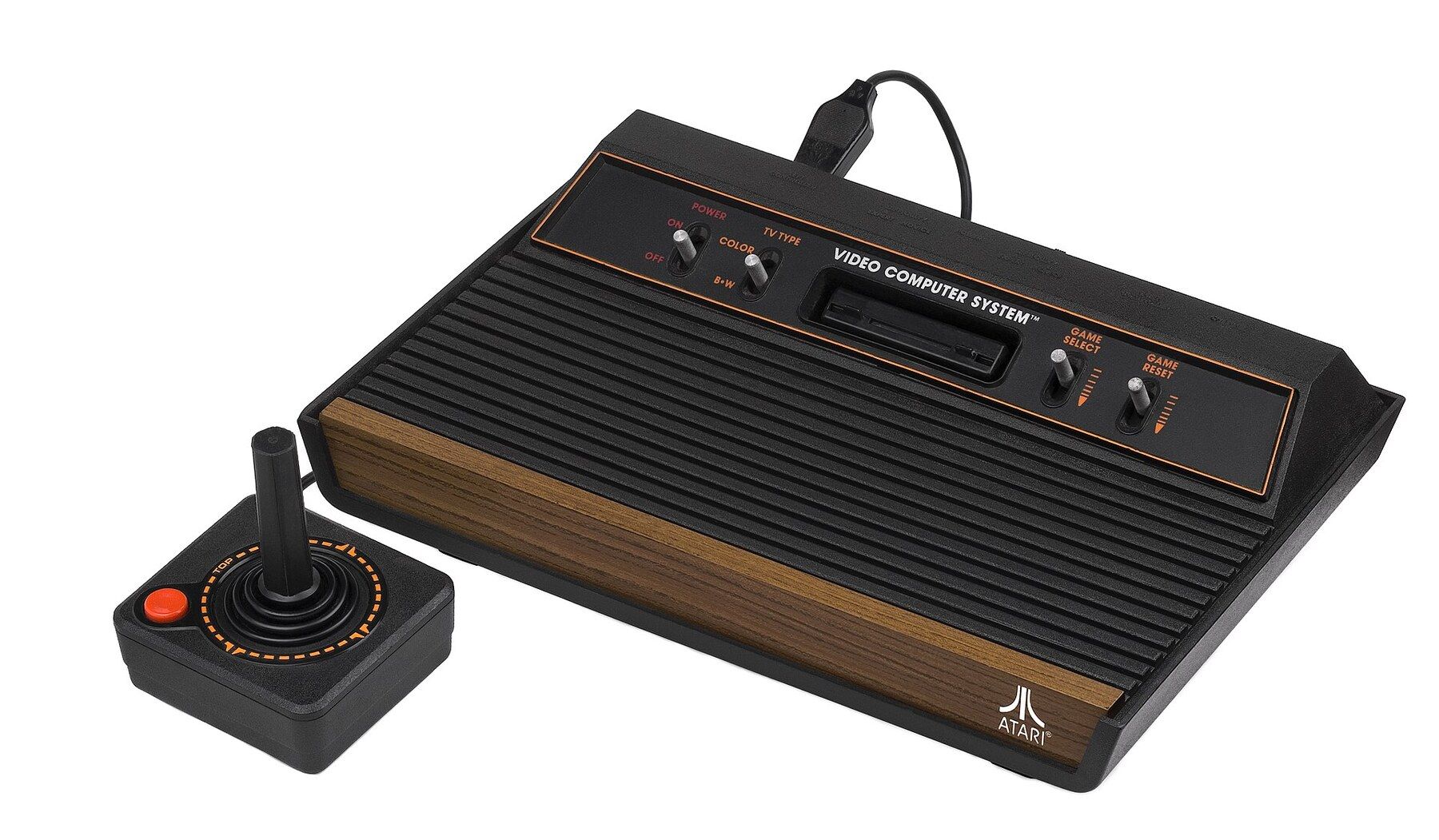
Atari, Inc. and then Atari Corporation sold home game hardware for two decades, from the Pong unit Atari, Inc. built for Sears in 1975 to the Jaguar that Atari Corporation launched in November 1993. The four cartridge consoles have their own pages: the Atari 2600, sold from 1977 to 1991; the Atari 5200 of 1982; the Atari 7800, introduced by Atari, Inc. in May 1984 and released by Atari Corporation in 1986; and the Atari Jaguar. The machines without a page of their own are covered below.
Home Pong and the dedicated consoles, 1975 to 1979
Before the 2600, each Atari home unit played only the games wired into its chips. The first was home Pong. Under an agreement of March 17, 1975, Atari, Inc. built it and Sears sold it exclusively through Christmas 1975 under Sears’s new Tele-Games brand. Nolan Bushnell later put 1975 production at 180,000 units (Current). Joe Decuir names Harold Lee as the main designer of its chip. Atari, Inc. sold the same unit under its own name as the Pong C-100 from early 1976.
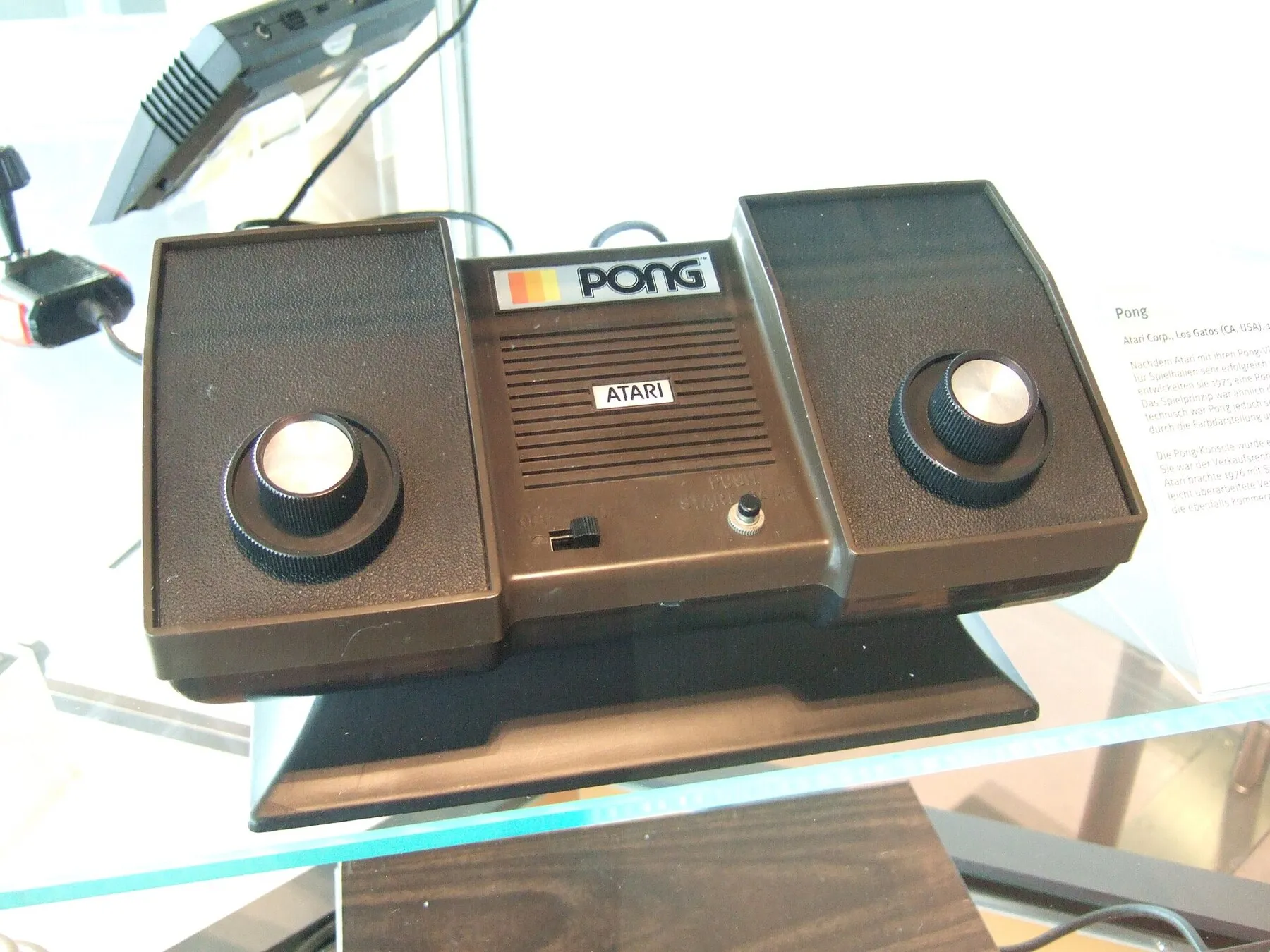
Prices and dates below are those reported at introduction or in the first advertisements, as compiled by Current from Television Digest, trade papers and newspaper ads:
| Unit | Introduced | Price quoted |
|---|---|---|
| Tele-Games Pong (Sears #25796) | Fall 1975 | US$98.95 in the Sears Wish Book, US$99.95 in an October ad |
| Pong C-100 | January 1976 CES, in stores by March | US$99.95 |
| Super Pong C-140 | June 1976 CES | US$90 |
| Super Pong Ten C-180 | January 1977 CES | US$79.95 |
| Video Music C-240 | January 1977 CES | “under $200” |
| Video Pinball C-380 | June 1977 CES | US$74.95 |
| Stunt Cycle SC-450 | June 1977 CES, in stores by November | US$72.95 |
| Ultra Pong and Ultra Pong Doubles | June 1977 CES | US$42.95 and US$52.95 |
By August 1976 Atari, Inc. was shipping three Super Pong units for every Pong, according to its national sales manager. Video Music was not a game: an archived Atari Historical Society page describes a box wired between a hi-fi system and the television that turned the music into moving shapes on screen, an idea it credits to Bob Brown of Atari, Inc. Video Pinball played seven games, Breakout among them.
The cartridge console made these units obsolete. At the January 1978 CES Atari, Inc. showed the Game Brain (C-700, US$115), a cartridge machine meant to replace Super Pong, Video Pinball, Stunt Cycle, Ultra Pong and Video Music with plug-in versions; it never shipped. In July 1979 Television Digest reported that Atari, Inc. was out of the dedicated console business and closing out its stock of Video Pinball, Ultra Pong and Stunt Cycle (Current).
Consoles that never shipped
Several machines were announced and then dropped:
- Atari 2700 Remote Control VCS (1981). A wireless version of the 2600, shown at the January 1981 CES and cancelled by January 1982; see the Atari 2600 page.
- Cosmos (1981). A tabletop game announced on January 5, 1981 and priced in February at US$99.95 with Asteroids, for August delivery; it never shipped (Current). An archived Atari Historical Society page describes LED game graphics shown behind a holographic backdrop, one per cartridge, which Atari, Inc. called “Holoptics”, and says Al Alcorn headed the project.
- Sylvia. A successor to the 2600 already under way in Atari, Inc.’s advanced technology group by mid-1980, also called Super Stella and, in a 1982 model list, the 3200 (Current). The Atari 5200 page explains how the 3600 number ended up attached to it and to the 7800.
- MindLink (1984). A headband controller read by infrared, introduced at the June 1984 Summer CES for the 2600, the 7800 and Atari computers; it never shipped (Current).
Atari Lynx (1989)
The Lynx is a handheld with a color LCD screen that Atari Corporation took over from Epyx in 1989. Dave Needle and R.J. Mical designed it at Epyx as the “Handy”; in an interview printed by Electronic Gaming Monthly in September 1989, Needle dated the start of the project to a lunch with Epyx’s chairman in August 1987. They described a 65C02 processor, 64 KB of RAM, a 160 × 102 screen showing 16 colors from a palette of 4,096, four sound channels and a link cable for multiplayer games.
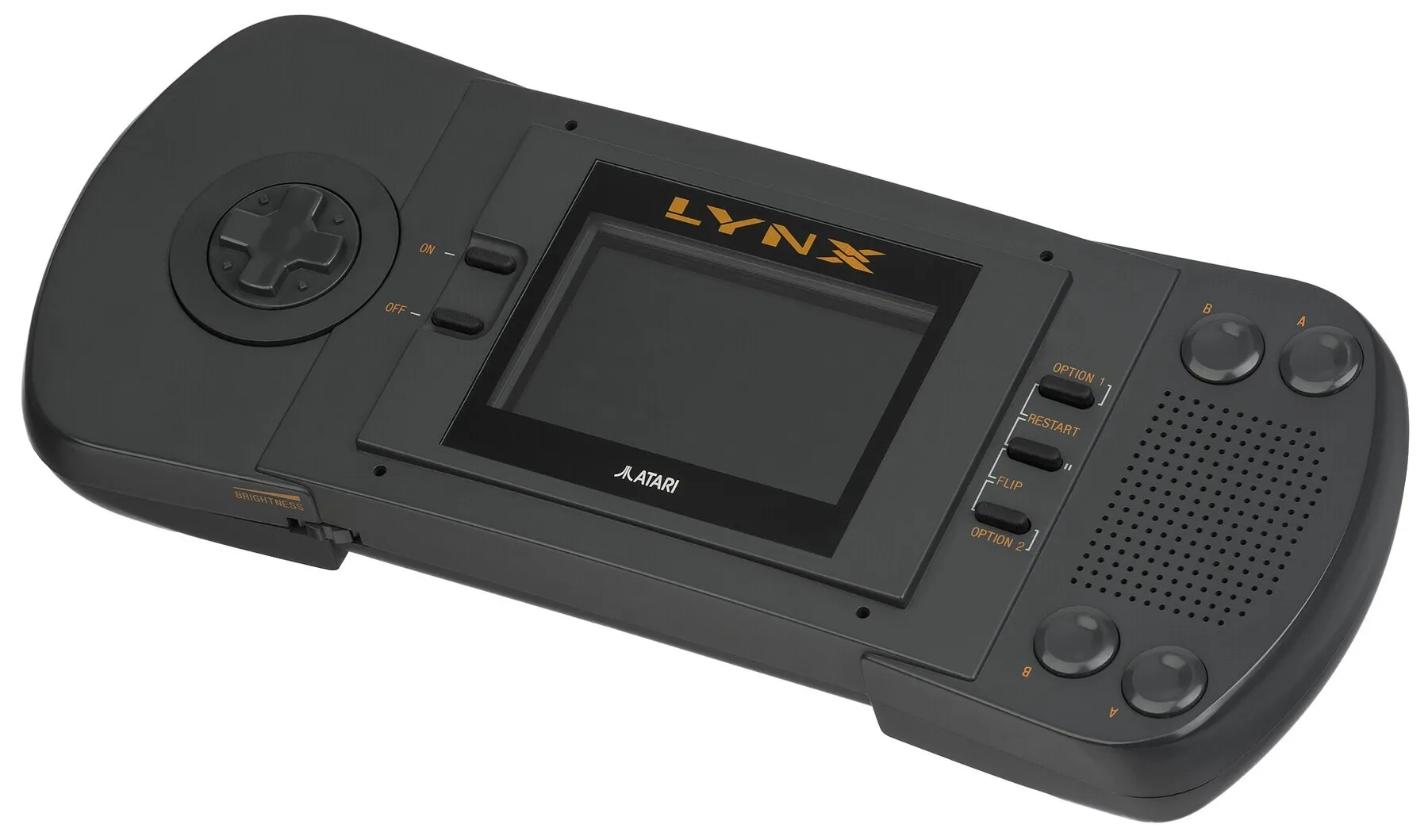
Epyx showed the Handy privately at the January 1989 CES. Atari Corporation introduced it at the Summer CES on June 3, 1989 as the “Atari Portable Color Entertainment System”, “under $150”, due in August. The launch event for the Lynx took place in New York on November 21, 1989, at US$179.99 with California Games, and Atari Corporation announced availability across the United States in May 1990. The smaller Lynx II followed in August 1991 at US$99.99 for the console alone (Current).
XE Game System (1987)
The XE Game System, or XEGS, is an Atari 65XE computer repackaged as a console. Atari Corporation introduced it at the American International Toy Fair in New York in February 1987 with a detachable keyboard, a CX40 joystick and the XG-1 light gun, bundled with Flight Simulator II, Missile Command and the light-gun game Bug Hunt (Current). Antic described it in June 1987 as “essentially a two-piece 65XE computer”, with 64 KB, for under US$150 and due in the fall; in March 1988 it listed the price as US$149.95. Because it is a 65XE inside, it is covered with the computers on the Atari 8-bit family page.
USA Today reported in December 1987 that, according to Atari Corporation, the XE Game System had sold out in November (Current). AtariUser magazine wrote in July 1992 that, as of Christmas 1991, Atari Corporation had decided to discontinue the XEGS together with the 2600 and 7800 (Current).
Sources
- A History of Syzygy / Atari, Michael D. Current, compiled from period sources
- A History of WCI Games / Atari / Atari Games / Atari Holdings, Michael D. Current, compiled from period sources
- A History of Tramel Technology / Atari, Michael D. Current, compiled from period sources
- Champions in Our Midst: Game on! (Joe Decuir), IEEE Consumer Electronics Magazine, July 2015
- The Atari Cosmos Tabletop Game System (archived Atari Historical Society page), Internet Archive, captured February 2002
- The Atari Video Music (C-240) (archived Atari Historical Society page), Internet Archive, captured 2001
- Lynx Creators: interview with Dave Needle and R.J. Mical (from Electronic Gaming Monthly no. 4, September 1989), Atari Times, via Internet Archive, November 3, 2003
- Atari News Update: XE Game System, Antic, vol. 6 no. 2, June 1987
- Shootout of the Video Game Systems, Antic, vol. 6 no. 11, March 1988
Last reviewed October 30, 2026.
Related pages
- Atari 2600 (Video Computer System)
Atari, Inc.'s cartridge console of 1977: a 6507 processor, 128 bytes of RAM and the TIA video chip, dropped in the United States at the end of 1991
- Atari 7800 ProSystem
Designed by General Computer Corporation, announced by Atari, Inc. in May 1984 and sold by Atari Corporation from 1986, with 2600 compatibility built in
- Atari 8-bit computer family
Atari's 6502 home computers, from the 400 and 800 of 1979 to the XE Game System of 1987, all built on ANTIC, CTIA or GTIA, and POKEY
- How Atari was founded (1971–1973)
From the Syzygy partnership and Computer Space to the June 1972 incorporation, Pong at Andy Capp's Tavern, Dabney's buyout and Kee Games