How Atari was founded (1971–1973)
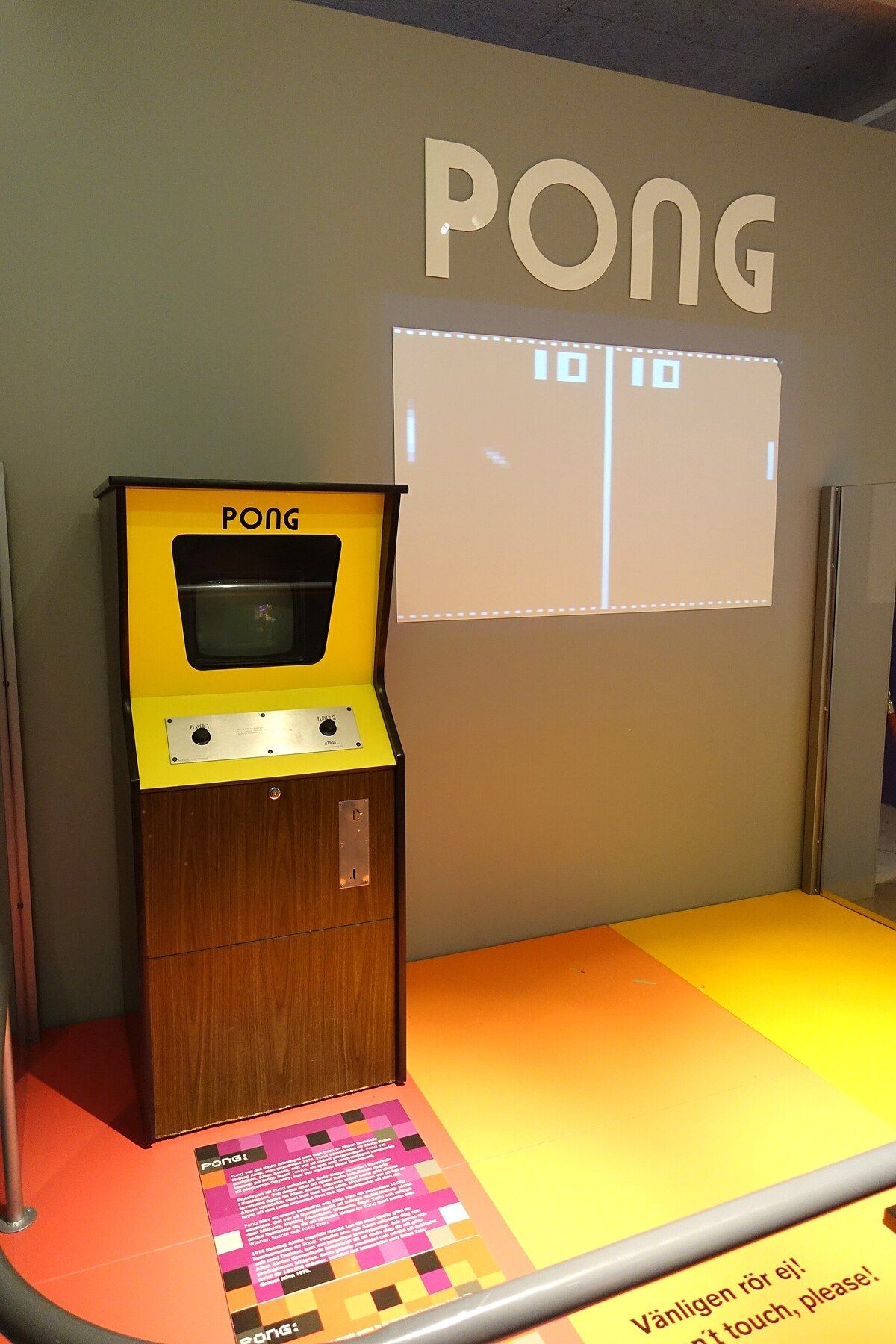
Atari, Inc. was incorporated in California on June 27, 1972 by Nolan Bushnell and Ted Dabney, two former Ampex engineers who had already designed Computer Space, the first mass-produced coin-operated video game, under a partnership named Syzygy. The company’s first game, Pong, designed by Allan Alcorn, was tested at Andy Capp’s Tavern in Sunnyvale in September 1972, and the first units were sold in November 1972. By March 1974 Dabney had sold his shares and left the board, and Bushnell had set up Kee Games, a supposed competitor that Atari secretly controlled.
Syzygy, the partnership behind Computer Space
Bushnell and Dabney met at Ampex, the video recorder maker, where they shared an office. Their first plan was a coin-operated version of Spacewar!, the MIT computer game, with several cabinets sharing one minicomputer. In his 2012 oral history for the Computer History Museum, Dabney said that a programmer, Larry Bryan (spelled “Bryant” in that transcript, “Bryan” in his 2018 Smithsonian interview), proposed the name Syzygy, and that a cost study ended the minicomputer plan: “There’s not enough quarters.”
Bushnell then moved the game out of software and into dedicated logic circuits. He recalled in 2017 that the parts came to less than US$300, against US$1,500 budgeted for the minicomputer alone. Alexander Smith (2021) points out that a letter from Bushnell to Data General dated January 26, 1971 still planned an order of several Nova computers, and that Bushnell testified in his 1974 deposition that the software approach had not yet been ruled out at that date.
The founding date depends on the source:
- Atari’s 1972–73 financial statement dates the Syzygy partnership to January 1971, and an Atari prospectus drafted in early 1975 gives December 1970 (Alexander Smith, 2021).
- Atari Inc.: Business Is Fun (Goldberg and Vendel, 2012) placed the start in fall 1969. Smith considers that too early, after comparing it with those documents and with Bushnell’s 1974 deposition.
The starting capital also varies. Bushnell said in 2017 that each partner put in US$250. Dabney recalled US$100 each, in 2012 and again in 2018, and said Bryan never paid his share and was not part of the partnership that went ahead. Michael Current’s timeline counts both: US$100 each in late 1970, then US$250 more each when the partnership was formed, for US$350 apiece (citing Goldberg and Vendel).
Computer Space at Nutting Associates (1971)
Bushnell left Ampex in March 1971 to work as a contract engineer at Nutting Associates, a coin-operated machine maker in Mountain View. Dabney kept his Ampex job at first and helped in the evenings. Syzygy licensed the game to Nutting for a royalty of 5 percent on unit sales; Nutting provided the facilities and paid the manufacturing costs (Technologizer, 2011). The date of the license, August 23, 1971, comes from a 1983 Video Review timeline cited by Smith and by Current.
Computer Space was shown at the Music Operators of America (MOA) show in Chicago on October 15, 1971. The first trade advertisement, in Cash Box of November 27, 1971, said it was available now, and Bushnell’s deposition in the later Magnavox patent litigation put the start of production in December (Smith, 2021). The design historian Raiford Guins gives an initial production run of 1,500 cabinets. How many actually sold is disputed: the published accounts he reviewed in 2015 give between 500 and 1,000.
In spring 1972 Syzygy also bought a small route of coin-operated machines placed in bars and restaurants from Dave Ralstin, Nutting’s former marketing director. That route provided cash and test locations; Alcorn later called Andy Capp’s Tavern “our best location.”
Incorporation as Atari, Inc. in June 1972
Michael Current’s timeline, built from Atari’s first financial statements and the trade press, gives this sequence:
- May 24, 1972: Bushnell attended a public demonstration of the Magnavox Odyssey home console in Burlingame, California.
- June 5: Bushnell and Dabney stopped working as contract engineers for Nutting.
- June 9: the articles of incorporation were signed by the first directors: Bushnell, Dabney and their wives, Paula Bushnell and Joan Dabney. They authorized 75,000 shares of common stock at US$1.
- June 26: Bushnell signed a royalty agreement with Bally Manufacturing in Chicago. For six months from July 1, Bally would pay US$4,000 a month (US$24,000 in all) for a video game and a pinball design, plus a 3 percent royalty on any game it accepted.
- June 27: the articles were filed with the California Secretary of State as those of Atari, Inc.
- July 1: the Syzygy partnership was merged into Atari, Inc., with 3,000 shares going to Bushnell and 2,000 to Dabney. The company kept doing business as “Syzygy Co.”
TIME confirmed the June 27 filing date in 2012, and described the first office as 1,700 square feet in Santa Clara. Alcorn, who joined in June 1972, said he was hired for US$1,000 a month plus 10 percent of the stock.
Why the company is called Atari
The founders could not incorporate under the name Syzygy because another California company already held it. Bushnell said in 2017 that it was a candle maker in Mendocino. Harold Goldberg’s 2011 book calls it a roofing contractor.
The incorporation form asked for three names in order of preference. Dabney remembered the Secretary of State’s office asking for three names and picking one. Bushnell recalled Syzygy as the first choice, a second name he no longer remembered, and Atari as the third, the one that was granted.
Atari is a term from the board game Go, which Bushnell and Dabney played at lunch at Ampex (Goldberg, 2011). Bushnell described it as the warning that an opponent’s group of stones is about to be captured, comparable to “check” in chess.
Pong began as a practice project
Bushnell gave Alcorn a simple ping-pong game as his first assignment and told him it was for a home-game contract with General Electric. In his 2000 interview with the Atari Compendium, Alcorn said there was no such contract: Bushnell wanted him to practice on the simplest game he could think of. Alcorn had a prototype running in about three months. It used about 75 TTL chips, which he judged too expensive for a home product. It played well enough that Bushnell decided to put it in a cabinet and test it on location.
Bally was owed a video game under the June 1972 agreement. Dabney said the partners felt they could not offer Pong to anyone else, because Bally had paid them US$24,000. At the MOA show in Chicago, September 14 to 16, 1972, Bushnell presented Pong to Bally and to its Midway subsidiary. Both declined, and Bally still expected Atari to deliver a video game under the contract (Current).
The Andy Capp’s Tavern test: what is documented, what is told
Several sources agree on the basic facts:
- In September 1972 the prototype was placed in Andy Capp’s Tavern, 157 West El Camino Real in Sunnyvale, a bar on the Syzygy route. The building later became the Rooster T. Feathers comedy club.
- Alcorn told the Smithsonian in 2018 that he bought a Hitachi black-and-white television at Walgreens for about US$75 and turned it into the monitor. In 2000 he had named a Pay-Less store. Dabney built the cabinet, and the machine stood on a barrel next to a Computer Space.
- The prototype itself is in the collection of the Computer History Museum. A museum blog post from 2022 describes it as “a square wooden cube covered with a faux woodgrain plastic layer,” with a screen, two knobs and a coin box.
The coin mechanism is already a point of disagreement: Alcorn describes one taken from a pony ride, while Dabney said it came from a laundry machine. Alcorn said in 2000 that Bushnell considered US$25 a week a good result, and that the prototype took more than US$100 a week from the start.
Then comes the coin-box story. As Alcorn told it in 2000, he got a call that the machine had broken, went down to the bar and found the coin box so full that it had jammed the mechanism. In BuzzFeed’s 2012 account, the caller was Bill Gattis, who ran the bar, and Alcorn replaced the milk-jug coin box with a bread pan. Every version comes from later recollection, and the delay changes with the teller: about a month for Alcorn in 2000, “almost right away” for Dabney in 2012, a few days in BuzzFeed’s account, three days for Bushnell in 2017.
Loni Reeder, Bushnell’s longtime assistant, gave Harold Goldberg a different version, published by Vanity Fair in 2011: Atari staff stuffed the coin box themselves until the machine stopped, then waited for the bar to call. Goldberg presents the jam as a creation story that “might not be exactly true.” None of the sources listed here cites a 1972 document about it.
From prototypes to production (late 1972 to 1973)
Once Bally and Midway had passed, Atari decided to build Pong itself. Dabney’s account of the first weeks:
- he bought 50 Hitachi television sets with his own money, and ordered cabinets from P.S. Hurlbut, the Santa Clara cabinet maker that worked for Nutting;
- Bushnell sold 300 units in three phone calls, “sight unseen”;
- Atari borrowed US$3,000 from a Wells Fargo branch in Cupertino to fill those orders.
In November 1972 Atari sold 12 of the 13 prototype upright cabinets built so far, ten of them to three California distributors (Current). BuzzFeed dated the first deliveries to bars and pizza parlors to November 29, 1972. In 2000 Alcorn put the early manufacturing cost at about US$500 a unit and the selling price at about US$1,200, paid in cash up front by operators. In 2018 he gave the price as US$1,000.
In early 1973 production moved to a former roller-skating rink at 1600 Martin Avenue, Santa Clara. Goldberg describes assembly workers hired through the local unemployment office at US$1.75 an hour. On February 22, 1973, Atari signed an agreement with Midway: Midway would pay US$31 for each Pong it built, and it released its copy as Winner in April. In May 1973 Atari’s headquarters moved to 14600 Winchester Boulevard, Los Gatos (Current, citing Cash Box).
On April 15, 1974, Magnavox, which held the patents behind the Odyssey, sued Atari, Bally and three other companies, alleging that their arcade video games infringed those patents (Current).
Ted Dabney leaves (1973–1974)
On March 1, 1973, Atari bought back Dabney’s 2,000 shares, 40 percent of the 5,000 then issued, for US$250,000 payable in ten annual installments (Atari’s 1972–73 financial statement, via Current). In April 1973 he moved from vice president of production to running the street route.
Dabney said in 2012 that he sold because Bushnell had told him he would otherwise move the company’s assets into another corporation and leave him with nothing. Bushnell, in 2017, said Dabney caused conflicts as an executive, that he told him he had to buy out his stock, and that he gave him “the cash-flow portion of the business,” the route, which he said was more profitable than Atari at the time.
In January 1974 Atari announced that it had sold the Syzygy name and the route to Dabney’s new Syzygy Game Company (Cash Box, January 26, 1974). Dabney left the Atari board, his last role there, in March 1974 (Current, citing Goldberg and Vendel).
Kee Games, a competitor owned by Atari (1973–1974)
Atari sold its games through one exclusive distributor in each city. Bushnell said in 2017 that the other distributors in those cities were trying to build up a competitor to Atari, so he decided to create that competitor himself.
Kee Games was incorporated on September 25, 1973, from articles signed on September 14 (Current):
- Atari held the majority, but the company was presented as an independent rival.
- Its president was Joe Keenan, Bushnell’s neighbor, after whom it was named.
- Steve Bristow, an Atari engineer, was vice president of engineering, and Gil Williams, Atari’s plant manager, was vice president of operations.
- It operated from 330 Mathew Street, Santa Clara.
Kee’s first game, Elimination!, came out in October 1973. Atari then licensed it as Quadrapong, and several later games were sold under both brands. In Bushnell’s telling, the story was floated that Kee had poached Atari staff and that Atari had won a share of it in a lawsuit. This is his recollection, not a documented fact.
In September 1974 Atari announced that it was acquiring Kee Games, and Keenan became Atari’s president (Cash Box, September 21, 1974). Kee Games introduced Tank at the MOA show in Chicago in November 1974. The history of Atari’s coin-op division follows the arcade business from there.
Where the founding record can be checked
The Computer History Museum holds the Pong prototype, as well as the oral histories of Dabney (2012) and Alcorn (2008). The Smithsonian’s Lemelson Center recorded Bushnell in 2017 and Dabney and Alcorn in 2018. These interviews, given forty years or more after the events, are the main source for the anecdotes, and they do not always agree.
Dated facts such as the incorporation, the Bally and Midway agreements and the Dabney buyout come from Atari’s 1972–73 financial statement and the trade press of the time, as compiled in Michael Current’s timeline. The corporate history of Atari picks up with the sale to Warner Communications in 1976, and the arcade catalog lists the cabinets.
Sources
- A History of Syzygy / Atari, Michael D. Current (timeline compiled from Atari financial statements, Cash Box and Vending Times), 2008–2026
- Oral History of Samuel F. (Ted) Dabney, Computer History Museum, July 16, 2012
- Oral History of Allan (Al) Alcorn, Computer History Museum, April 26 and May 23, 2008
- Interview with Nolan Bushnell, conducted by Christopher Weaver, Smithsonian Institution, Lemelson Center, Video Game Pioneers Oral History Collection, November 17, 2017
- Interview with Samuel F. "Ted" Dabney, conducted by Christopher Weaver, Smithsonian Institution, Lemelson Center, Video Game Pioneers Oral History Collection, March 15, 2018
- Interview with Allan E. Alcorn, conducted by Christopher Weaver, Smithsonian Institution, Lemelson Center, Video Game Pioneers Oral History Collection, March 16, 2018
- Interview: Al Alcorn (by Brian Deuel), The Atari Compendium, 2000
- Atari at 40: Catching Up with Founder Nolan Bushnell, TIME, June 27, 2012
- The Origins of the First Arcade Video Game: Atari's Pong (excerpt from All Your Base Are Belong to Us), Vanity Fair, March 28, 2011
- Atari Teenage Riot: The Inside Story Of Pong And The Video Game Industry's Big Bang, BuzzFeed, November 2012
- Worldly Wednesdays: A Timeline of Computer Space, They Create Worlds (Alexander Smith), May 12, 2021
- Computer Space and the Dawn of the Arcade Video Game, Technologizer, December 11, 2011
- Beyond the Bezel: Coin-Op Arcade Video Game Cabinets as Design History (Raiford Guins), Journal of Design History (author copy on Academia.edu), 2015
- Pong prototype, catalog number 102741638, Computer History Museum
- 50 Years of Fun With Pong, Computer History Museum, 2022
- Pong 40th anniversary: Rooster T. Feathers, Metro Silicon Valley, December 5, 2012
Last reviewed October 30, 2026.
Related pages
- Atari corporate history: from Atari, Inc. to Atari SA
Atari, Inc., Warner, the 1984 split, Atari Corporation, Atari Games, JTS, Hasbro Interactive, Infogrames and Atari SA, with dates and prices
- A history of Atari's arcade division
The coin-op business from Pong in 1972 to Atari Games under Namco, Time Warner and Midway, until the Milpitas studio was wound down in 2003
- Atari arcade games
The main Atari coin-op cabinets from Pong in 1972 to Hard Drivin' in 1989, with their display technology and what each one introduced
- Atari consoles
Home Pong, the 2600, 5200, 7800 and Jaguar, the Lynx handheld, the XE Game System, and the consoles Atari announced but never shipped