The Atari Sweet 16 project
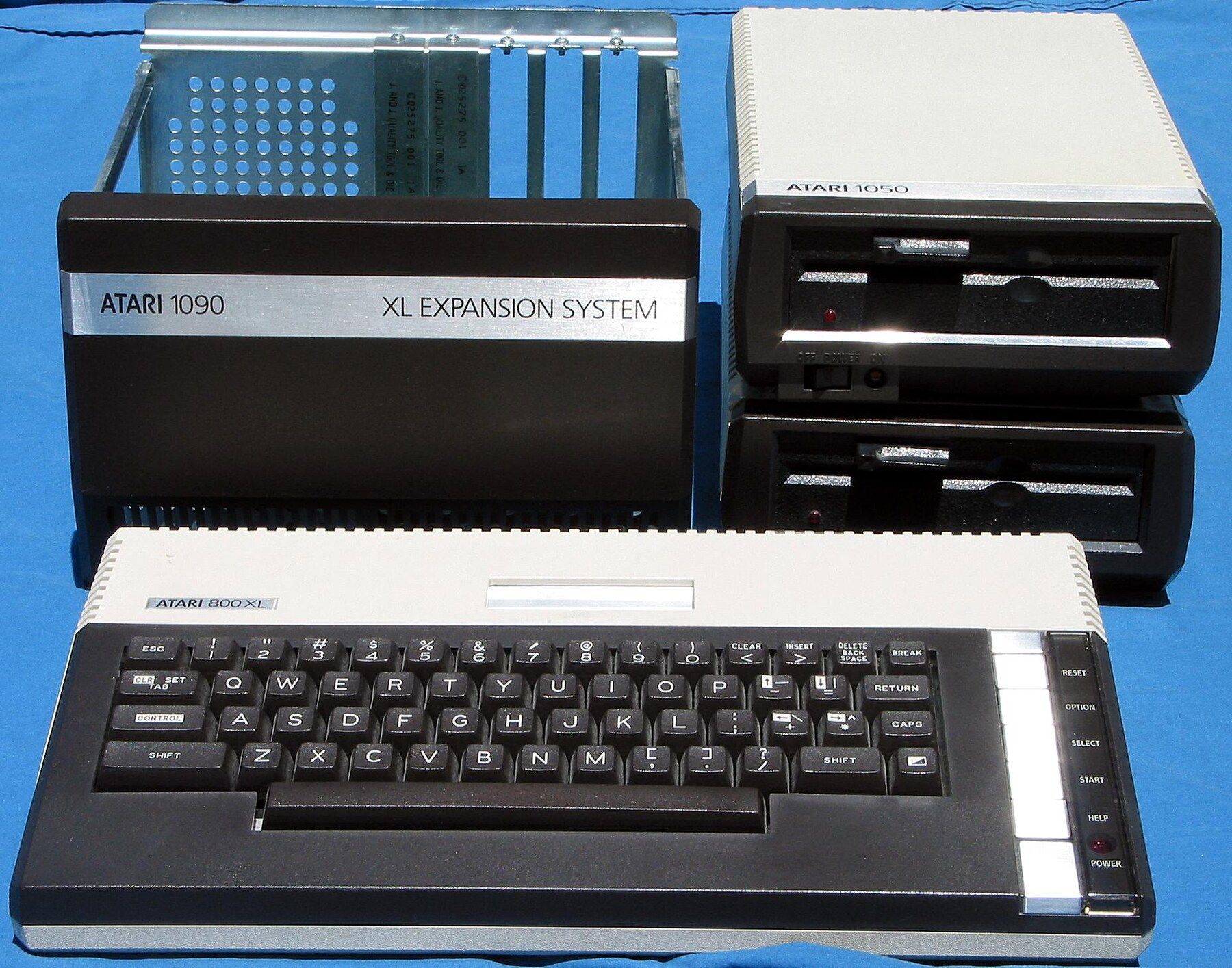
Sweet 16 was the internal name of the Atari, Inc. project, in 1982, to replace the Atari 800 with a smaller, cheaper computer built on a single board. The main sources are an Atari production specification dated September 29, 1982, which describes a closed 64 KB machine close to the Atari 1200XL, and an archived Atari Historical Society (AHS) page that describes earlier drafts with far more expansion. The 1200XL shipped in 1983, and several of the ideas it lacked returned in the 600XL and 800XL.
Names and dates
Michael Current’s Atari 8-bit FAQ traces the project to a “Z800 Product Specification” dated August 26, 1981, and to a January 25, 1982 memo by software consultant Harry Stewart recording that Z800 was now called Sweet-16. The September 1982 specification confirms the link, saying the S-16 “is referred as the Z800” and that the two are the same product. It is signed by Ajay Chopra, Dave Sovey and Larry Plummer; the FAQ credits Chopra as system architect and author of the 1200XL product specification. Stewart’s own list of his memos, dated April 25, 1983 and kept with his papers on the Internet Archive, groups them under “A300/Z800/SW-16” and includes a research report on Z800 and A800 compatibility dated August 26, 1981 and a “Definition of Sweet-16 international character set” dated January 25, 1982. It does not mention the 1000 names.
The archived AHS page gives as its source a confidential Atari file of Sweet 16 specifications dated April 7, April 14 and June 11, 1982, by Chopra. No scan of those drafts could be located. The FAQ’s entry for April 7 links to a mirror of the Atari Museum’s Sweet 16 page, which carries the same text as the AHS page, so the spring 1982 dates rest on a single account.
The plan as the Atari Historical Society describes it
Everything in this section rests on the archived AHS page alone; the spring 1982 drafts it cites have not been found. In the AHS account:
- Models: the Atari 1000, with 16 KB of RAM, and the Atari 1000-X, with 64 KB.
- Case and keyboard: a single-piece case, four function keys and a HELP key, plus an international character set and self-test diagnostics in the operating system.
- Serial bus: two SIO ports instead of one, upgraded and fitted with DB-15 connectors.
- Expansion: a Parallel Bus Interface (PBI), an 8-bit connection that would let add-on hardware address the custom chips directly.
The AHS also ties an expansion box to these drafts, the 1090 XL Expansion System, with five slots, and mentions earlier versions of it with eight. The dated sources found for the box are all later: the eight-slot box Compute! described in August 1983 and the five-card 1090 shown in June 1984, covered below. The AHS uses the same plan to explain why the 1010 recorder, the 1025 printer and, later, the 1050 drive have 10xx numbers rather than 12xx ones: in its account they were developed for the 1000 models. No Atari document consulted for this page says so.
The Atari Museum, whose Sweet 16 text matches the AHS page, adds prototype details on its 1200 page, based on board plots it shows: a revision schedule for the circuit board running from March 26 to May 13, 1982; an X8A revision from early July 1982 with a 50-pin header wired to the main chips and two DB-15 footprints where the SIO connector would be; and an X10A revision, also from July 1982, close to the production 1200XL. These plots are the only physical trace found of the two DB-15 ports.
What the September 1982 specification says
The surviving document, Atari drawing C061186, is a 74-sheet production specification marked “Initial Release” and dated September 29, 1982. By then the plan had narrowed. It describes “an enhanced version of the Atari 800” that is “reduced in size, lower in price and upward compatible”, gives “ATARI 1200” (16 KB) and “ATARI 1200X” (64 KB) as preliminary names, and states that only the 64 KB version would be manufactured.
Its stated goals were low cost, reduced size, compatibility with the 800 and 400, “High Performance Peripheral Interface Mechanisms”, a better human interface and better quality. The hardware it lays out is the 1200XL as sold:
- one logic board in place of the 800’s separate boards, with no slots for personality cards;
- a rear panel with a single serial I/O connector, RF and monitor outputs, a channel switch and the power input, and no expansion connector;
- one cartridge slot and two controller ports, both on the left side;
- no console speaker, and no +12 V on the serial port;
- three lights (power, L1 and L2) on the 64 KB version, a power light only on the 16 KB version.
Its compatibility chapter already expected losses: four-player games such as Basketball would lose that option, and software for the 800’s right cartridge slot would not work.
What came out of it
The 1200XL, announced in December 1982, followed the September specification. The AHS page puts the cuts down to the managers of the home computer division: in its account they removed the parallel bus, the upgraded serial ports and built-in BASIC because they saw the machine as an appliance for consumers, not for hobbyists. Antic gave a similar account in 1984, after talking to Atari engineers: the 1200XL “was considered to be a complete computer”, and the engineers had not exposed the parallel bus, partly out of concern over the “crazy” things that might be plugged into it.
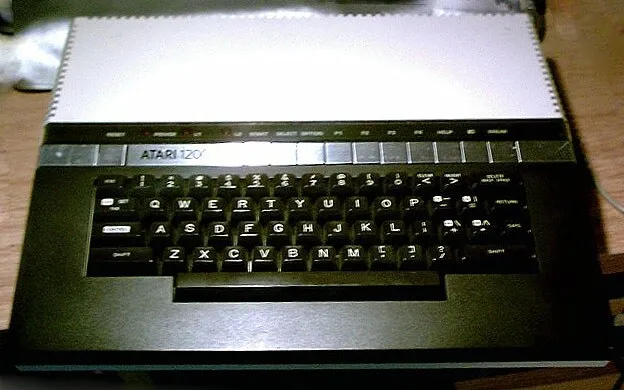
Several of the dropped features came back six months later. The 600XL and 800XL, introduced at the June 1983 Consumer Electronics Show, have a parallel bus connector at the back and Atari BASIC built in; the FAQ lists “S-8” or “Sweet-8”, “Liz” and “Surely” among the 600XL’s internal names. They lack the F1 to F4 keys. The 1400XL, announced at the same show, kept the 1200XL’s case and keys and added the rear expansion slot, a modem and speech; the AHS page calls it the closest model to the original plan. It never shipped.
The expansion box did not ship either. Compute! described it in August 1983 with eight card slots, two RS-232 ports and a parallel port. According to the FAQ, the revised 1090 XL Expansion System that Atari showed privately in June 1984 took five cards, and only prototypes were made. The Atari 8-bit family page covers the XL models and peripherals that did reach stores.
Sources
- Sweet-16 Production Specification, drawing C061186, revision 1AX, Atari, Inc., scan hosted by the Atari Museum, September 29, 1982
- The Atari Sweet-16 Project (archived Atari Historical Society page), Internet Archive, captured February 1999
- Atari 1200 prototype, Atari Museum
- Atari 8-Bit Computers: Frequently Asked Questions, Michael Current
- Memo list, Harry B. Stewart to Scott Scheiman (Atari Harry Stewart papers), Internet Archive, April 25, 1983
- The Fall Computer Collection At The Summer Consumer Electronics Show, Compute!, issue 39, August 1983
- Inside Atari: Evolution of the XL Computers, Antic, vol. 3 no. 2, June 1984
Last reviewed October 30, 2026.
Related pages
- Atari 1200XL
The 64 KB successor to the Atari 800, announced in December 1982, shipped in March 1983 at US$899 and out of production by July
- Atari 8-bit computer family
Atari's 6502 home computers, from the 400 and 800 of 1979 to the XE Game System of 1987, all built on ANTIC, CTIA or GTIA, and POKEY
- Atari 400 and 800
Atari's first home computers, announced late in 1978 and shipped from October 1979: a sealed, low-cost 400 and an expandable 800 on the same chips