Atari 1200XL
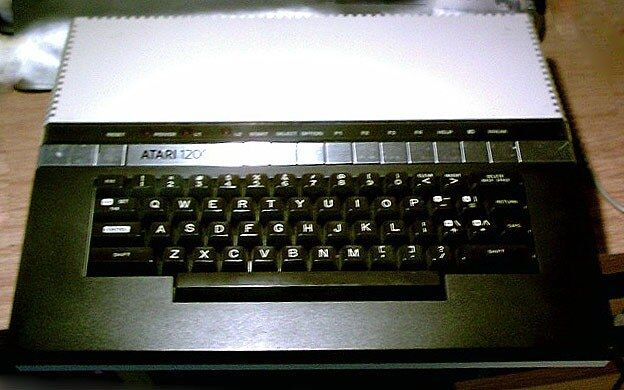
The Atari 1200XL was the 64 KB computer that Atari, Inc. introduced in December 1982 to replace the Atari 800. It kept the 800’s chips, put them on a single board in a low, flat case, and added function keys, a HELP key and a larger operating system. It went on sale in March 1983 at US$899 and was out of production by July, after complaints about its price, its lack of expansion and older software that would not run on it.
From Sweet 16 to the 1200XL
Inside Atari the project went through several names, which Michael Current’s FAQ lists as “Z800”, “Sweet-16” or “S-16”, “1000X” and “1200X”. Atari’s production specification for the S-16, in a revision dated September 29, 1982, describes it as “an enhanced version of the Atari 800”, “reduced in size, lower in price and upward compatible”, and says only the 64 KB version would be manufactured. The same document gives “ATARI 1200” (16 KB) and “ATARI 1200X” (64 KB) as preliminary marketing names. The earlier, more expandable versions of the plan are covered on the Atari Sweet 16 project page.
According to the Atari Museum, about 250 pilot units labeled “1200”, without the XL, were built in October 1982.
Announced in December 1982, priced in January
Atari presented the 1200XL at a press conference in New York on December 13, 1982. Its press release quoted chairman Raymond E. Kassar: “We believe that the Atari 1200XL will set the standard for a new generation in home computing.” The release promised that the price would be announced at the Consumer Electronics Show in January and that first deliveries would follow in the first quarter of 1983. It also credited the machine with “12 user programmable function keys”; the computer as shipped has four, F1 to F4, among 11 keys along the top.
What the sources say about the price:
- in December 1982, according to the FAQ, Atari spoke of a machine “well under $1,000”, and Compute! summed up the pitch in March 1983 as “under $1000”;
- the FAQ records a suggested retail price of US$899 announced at the CES of January 6 to 9, 1983, and a reader’s editorial in ANALOG Computing in June 1984 gives the same US$899, made official that January;
- in June 1983, Compute!’s editor wrote that the machine, “recently announced at the $1000 level”, had “rapidly dropped to the $600-700 range” in stores.
The FAQ dates the first shipments to March 1983, citing a Kassar quote at US$899; the Atari Museum says the computer reached dealers in February. On June 1, 1983, the FAQ adds, Atari cut the list price from US$899 to US$549.
What changed from the 800
The 1200XL keeps ANTIC, GTIA and POKEY, so the display and sound match a late 800. The differences are elsewhere:
- Memory. 64 KB of RAM. Antic described it in 1984 as a 64 KB “underlay” beneath the ROM, all of it usable once the ROM is switched out except the 2 KB block reserved for the chips, which is why the FAQ counts 62 KB.
- Operating system. The ROM grew from 10 KB to 16 KB and added a self-test, an international character set, fine scrolling of text and a demonstration screen at power-up.
- Keys. Eleven keys across the top: RESET, START, SELECT, OPTION, F1 to F4, HELP, the Atari logo key and BREAK. By default F1 to F4 move the cursor; with CONTROL they switch the keyboard, the screen, the key click and the character set on or off.
- Indicator lights. L1 shows that the keyboard is disabled and L2 that the international character set is active. No other 8-bit Atari has them.
- Sound. Key clicks come through the television speaker; the internal speaker of the 400 and 800 is gone.
Some 800 features did not carry over. The 1200XL has two controller ports instead of four, one cartridge slot instead of two, no memory slots and no built-in BASIC. It is NTSC only. The FAQ also notes that +12 V on pin 12 of the SIO port is not connected and that pin 10 no longer supplies +5 V, so peripherals that drew power from the computer do not work with it.
Software that would not run
The new operating system moved many internal addresses. Programs that used Atari’s documented entry points kept working; programs that called the old ROM directly did not. Bill Wilkinson, writing in Compute! in May 1983, listed “nearly complete compatibility with the 400/800 systems” among the machine’s pluses and pointed developers to Atari’s “rules” on memory limits, vectors and device drivers. Atari’s own Translator listing later put the failures down to “violations” of the rules for proper use of the operating system. John J. Anderson’s Creative Computing column was blunter in June 1983: “not even the Atari Word Processor will boot.” Antic’s 1984 list of incompatible titles named Atari Word Processor, Text Wizard and LJK’s Letter Perfect.
The missing controller ports caused a second, hardware problem. Atari’s own September 1982 specification noted that four-player games such as Basketball would lose that option, and Antic later explained that the chip register formerly used for ports 3 and 4 now switched the ROM and the indicator lights.
Atari’s fix was the Translator, a disk that loads the 800’s revision B operating system into the RAM under the ROM. The source listing credits Greg Riker with an original version dated March 20, 1983; the release version is dated September 20, 1983 and requires 64 KB. Antic listed it at US$9.95 in 1984, by which time it served the 600XL and 800XL as well.
Reception
Wilkinson listed the 62 KB of memory, the self-test, the function keys and the lights among the improvements, and the single cartridge slot, two joystick ports and lack of expansion among the losses. His verdict depended on price: “At anything under $450, it’s a terrific bargain.” With reports that the 1200XL would cost more than the 800, he added: “If so, buy an 800 quick!” Anderson also complained that the boosted color signal was “ruinous to closed circuit reception” on a monitor.
Antic’s account in 1984 linked the design to its fate. The 1200XL “was considered to be a complete computer”; engineers did not expose the parallel bus, partly because they were wary of the “crazy” things that might be plugged into it, and “the hobbyists and even the mass consumers seemed to balk at the machine’s limitations, especially at its price tag.”
Discontinued after a few months
According to the FAQ, the 1200XL was built in Sunnyvale, California, from January to May 1983 and at Atari’s plant in Taiwan from April to July 1983. In his June 1983 column, Anderson reported that Atari had told him the machine would “undergo an overhaul”. Instead, at the Summer CES in Chicago that month, Atari replaced its whole computer line, “much-maligned 1200XL” included in Compute!’s words, with the 600XL, 800XL, 1400XL and 1450XLD. In the United States a US$100 rebate on the 1200XL, offered from April 11, 1983, ran until December 31. The FAQ dates the end of production to July 1983; some accounts, including Wikipedia, give June 1983, the month of the announcement.
In October 1983 Anderson printed a letter to a reader from William Bartlett, Atari’s manager of product support, stating that “the 1200XL will not be redesigned” and that it “will continue to be sold in its original configuration”; Anderson answered that the machine had been discontinued. The new XL models did keep much of its operating system: A.J. Sekel of Atari told Anderson that they used a redesign of the 1200XL OS, and Antic noted that they were styled like it. The Atari 8-bit family page covers them.
Sources
- Atari introduces the 1200XL computer (Atari press release of December 13, 1982, and Creative Computing, April 1983), Michael Current
- Atari's New Top-Line Home Computer, Compute!, issue 34, March 1983
- INSIGHT: Atari, Compute!, issue 36, May 1983
- The Editor's Notes, Compute!, issue 37, June 1983
- Outpost: Atari, Creative Computing, vol. 9 no. 6, June 1983
- Outpost: Atari, Creative Computing, vol. 9 no. 10, October 1983
- The Fall Computer Collection At The Summer Consumer Electronics Show, Compute!, issue 39, August 1983
- Inside Atari: Evolution of the XL Computers, Antic, vol. 3 no. 2, June 1984
- The Atari Translator, Version 1, Side A (source listing), Atari, Inc., via atari800xl.eu, September 20, 1983
- Sweet-16 Production Specification, drawing C061186, revision 1AX, Atari, Inc., scan hosted by the Atari Museum, September 29, 1982
- Darkness at Noon (reader editorial), ANALOG Computing, issue 19, June 1984
- Atari 1200XL, Atari Museum
- Atari 8-Bit Computers: Frequently Asked Questions, Michael Current
- Atari 8-bit computers, Wikipedia
Last reviewed October 30, 2026.
Related pages
- Atari 400 and 800
Atari's first home computers, announced late in 1978 and shipped from October 1979: a sealed, low-cost 400 and an expandable 800 on the same chips
- The Atari Sweet 16 project
The 1982 Atari, Inc. plan for a smaller, cheaper successor to the 800, which reached stores in reduced form as the 1200XL
- Atari 8-bit computer family
Atari's 6502 home computers, from the 400 and 800 of 1979 to the XE Game System of 1987, all built on ANTIC, CTIA or GTIA, and POKEY
- Atari computers
The 8-bit line of 1979 to 1992, the ST family of 1985 to 1993, and Atari Corporation's PC compatibles, Portfolio palmtop and transputer workstation