A history of Atari's arcade division
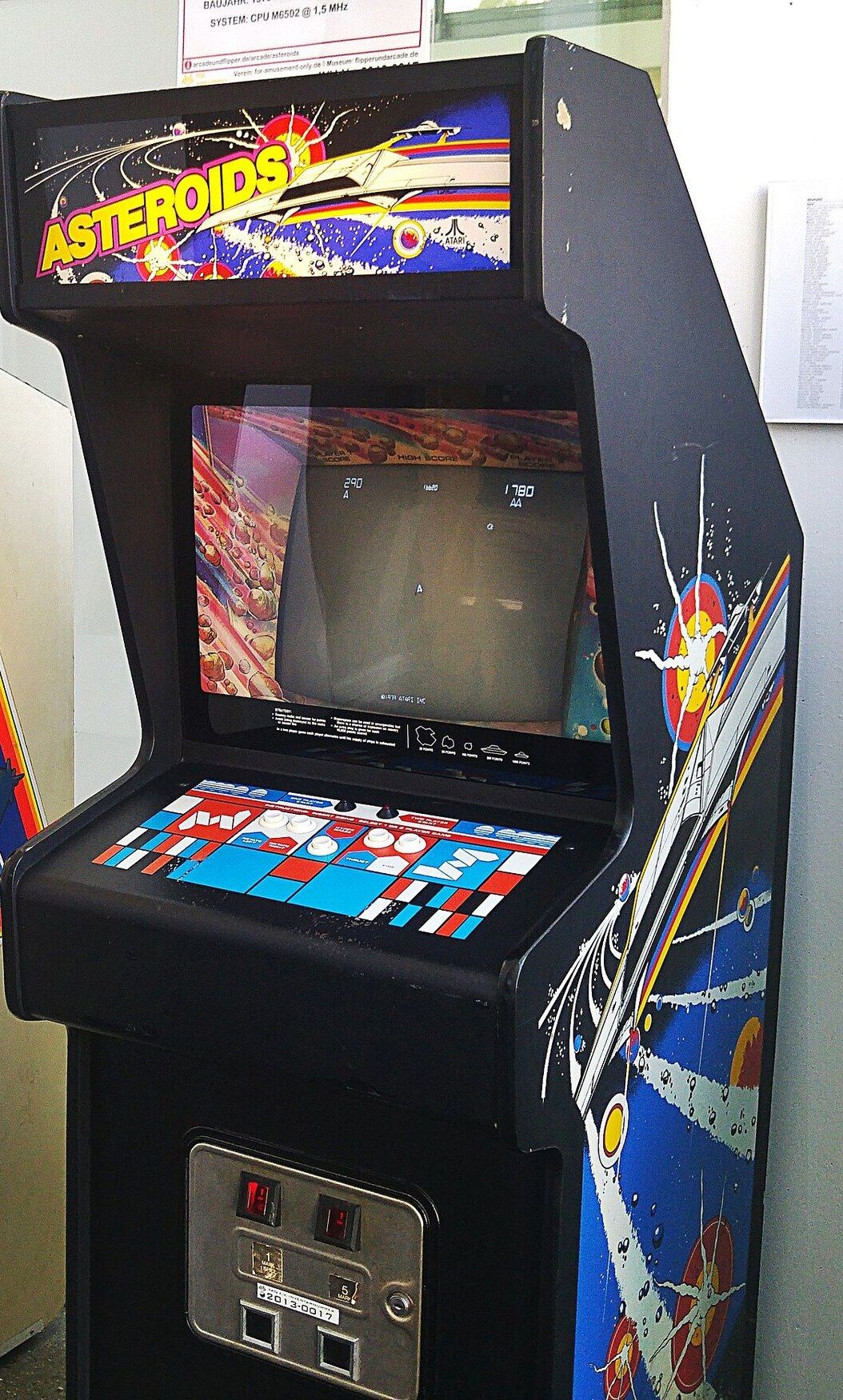
Atari’s arcade division made the coin-operated games, from Pong in 1972 to San Francisco Rush 2049, the last game to carry the Atari Games name. It belonged to Atari, Inc. until July 1984, when Warner Communications sold the home business to Jack Tramiel and kept the coin-op side. As Atari Games, it was controlled by Namco from 1985, by Time Warner from 1990 and by WMS Industries from 1996, and was renamed Midway Games West at the end of 1999. Midway wound down the former Atari Games studio in Milpitas, California, during 2003. The games themselves are listed in the catalogue of Atari arcade games.
Pong and its copies, 1972 and 1973
The archived Atari Historical Society page on the early coin-ops dates the first production Pong to November 29, 1972. In his 2018 Smithsonian oral history, Allan Alcorn, who designed the game, said it was so simple that “anybody could essentially make a Xerox copy of the printed circuit boards”. One of Atari’s own board suppliers, he added, was “selling more boards to our competitors than we were”. Alcorn also said a Pong cost about US$500 to build and sold for US$1,000, cash up front.
How many cabinets Atari, Inc. built is not settled:
- Alcorn: “three or four thousand”, against “like 12,000” copies and derivatives from other makers.
- The Computer History Museum: over 8,000 sold by 1974 and 35,000 in all.
- The Atari Historical Society page on its restored Pong, serial number ZZ-001: 38,000.
The three figures may not cover the same period. Alcorn’s answer to the copies was to design the next game, as “the competition was eating us up with knockoffs”. Space Race and Gotcha followed in 1973; the foundation article covers these first two years in more detail.
Kee Games: competing with itself, 1973 and 1974
The way coin-op games were distributed limited Atari, Inc.’s sales. Nolan Bushnell explained in his own Smithsonian interview that each city had one exclusive Atari distributor and two or three others carrying pinball and jukebox lines, which were trying to build up a competitor to Atari. Alcorn estimated that this kept Atari to about a third of the market.
Bushnell’s answer was Kee Games, a nominal rival run by his neighbor Joe Keenan. Atari gave it Steve Bristow as head of engineering, according to Alcorn, and “every other game” in Atari’s queue, according to Bushnell. Alcorn and Bushnell sat on its board while Atari told its distributors that Kee had stolen its games and its best engineer. The two companies then sold near-identical games under different names. The archived AHS page names Rebound (Atari) and Spike (Kee) as the first pair, and Quadrapong and Elimination as another. Once the secret came out, Bushnell said, Atari offered distributors both lines, and was “the only coin-op company that had dual distribution in the whole business”.
Kee’s Tank, dated November 4, 1974 on the archived AHS page, was Bristow’s idea, finished by Lyle Rains; according to that page, both men credited it with carrying Atari through 1975. At the same time Atari, Inc. was in trouble. Steve Fulton’s history of the company for Gamasutra puts its loss for fiscal 1973–74 at US$500,000, partly because an accounting error had Gran Trak 10 selling below its manufacturing cost. Kee Games was merged back into Atari in 1974 and Keenan became Atari’s president; Fulton places the merger at the end of that year.
Grass Valley: Cyan Engineering as an outside lab
Steve Mayer and Larry Emmons, two former Ampex engineers, had formed Cyan Engineering in Grass Valley, in the Sierra foothills of California. Bushnell hired the five- or six-person firm as Atari’s advanced development group. In Alcorn’s words, Cyan took “the harder, longer-range stuff”, while Atari’s engineers in Los Gatos put games into production. Because Cyan was a separate company with a better credit record, it could still buy parts at times when Atari, Inc. was on credit hold.
Gran Trak 10 of 1974 shows both sides of the arrangement. The idea came from a graph-paper car race described in Martin Gardner’s column in Scientific American, and the steering wheel, gas pedal and gear shift were designed by a mechanical engineer in Cyan’s building. Production engineering was also done at Grass Valley, and the first machines had to be taken back: Alcorn put the number at about fifty in 2018, while Fulton quotes him as saying about 100. Alcorn redesigned the board himself.
Grass Valley also started Atari’s vector hardware. Howard Delman, the project engineer on Lunar Lander, said the first vector graphics concepts “came out of Atari’s research facility in Grass Valley”, which left a prototype with him to refine.
The X-Y years, from Lunar Lander to Star Wars
From 1979 to 1983 the coin-op division of Atari, Inc. built a series of games on X-Y monitors, which draw lines directly instead of scanning a raster picture:
- Lunar Lander (August 1979). Atari’s first vector game. Delman refined the Digital Vector Generator, Rick Moncrief the monitor, and Rich Moore wrote the program.
- Asteroids (November 1979). Developed on a modified Lunar Lander board by Ed Logg, Lyle Rains and Delman. Atari showed ten of them at the 1979 AMOA show, according to its operator newsletter, Coin Connection. Play Meter named it the highest-earning video game of 1980.
- Battlezone (November 1980). A first-person tank game on the newer Analog Vector Generator, with a “Math Box” for the 3D arithmetic, according to Jed Margolin, an Atari engineer.
- Tempest (October 1981). The first color game of the series. An Atari document of September 24, 1981 describes how the black-and-white QuadraScan monitor was redesigned around an in-line color tube.
- Star Wars (1983). Field tested around May 1983 and in production in July. Its yoke was a smaller version of the controller built for the Army Battlezone.
The Army version came from an approach in December 1980, according to Ed Rotberg, who programmed Battlezone. Atari built a prototype for an Army training conference in March 1981; Rotberg said he opposed the project. Margolin lists Major Havoc (November 1983) and The Empire Strikes Back (March 1985, a kit for Star Wars) as the last X-Y games produced.
The sales figures for these games come from different kinds of sources and do not match:
| Game | Figure | Source |
|---|---|---|
| Asteroids | 70,000 sold for US$125 million, “the largest-selling video game ever (not counting sales in Japan)” | Federal court opinion in Atari’s suit against Amusement World, November 1981 |
| Asteroids | More than 70,000 units | The Strong National Museum of Play |
| Asteroids | 47,840 uprights and 8,725 cocktail tables built | Atari production list transcribed by Scott Evans |
| Battlezone | About 25,000 units | Jed Margolin |
| Battlezone | 13,022 uprights and 2,000 cabarets built | Atari production list |
| Tempest | 25,112 uprights, 1,663 cocktails and 2,176 cabarets built | Atari production list |
| Star Wars | 10,245 uprights and 2,450 cockpits built | Atari production list |
| Star Wars | Around 15,000 sold | Jed Margolin |
The court opinion also says Asteroids was introduced in October 1979, a month before the date given by Margolin and the Strong museum.
The coin-op division in the crash, 1982 to 1984
The slump in coin-op came before the home market collapsed. In December 1982 Emanuel Gerard of Warner told analysts that the fourth quarter of 1981 had been the best in the division’s history, and that the third quarter of 1982 had been “rotten” and the fourth “a disaster”. The New York Times described an arcade industry with a glut of machines and few new places to put them. Atari also lacked hits: “We went dry somewhere in the spring,” Gerard said. According to Gerard, Pole Position, which the Times called “yet another Japanese game”, was already helping to turn the division around.
When Atari, Inc. moved home computer and video game manufacturing to Hong Kong and Taiwan in 1983, vice president Bruce Entin said it would continue making coin-operated games in California. The arcade market kept shrinking. Ed Logg, who began work on Gauntlet in late 1983, told the Strong museum that the problem was “how to get more money for the same amount of time”; his answer was a game for four players at once, with one coin mechanism per player.
In July 1984 Warner sold the home computer and video game business to Tramiel and kept the coin-operated games division, together with the Ataritel telephone project. The crash article covers that sale.
Atari Games under Namco and Time Warner, 1985 to 1996
In February 1985 Warner signed a definitive agreement to sell a controlling interest in its coin-op company to Namco. Warner vice president Geoffrey Holmes would say only that Namco was buying “more than 50%”, and the Los Angeles Times reported that Atari Games was believed to have had 1984 revenue of about US$50 million. In 1990 the Japanese trade paper Game Machine described the February 1985 purchase as about 40 percent of the stock. According to Michael Current’s timeline and the Strong museum’s finding aid for the Tengen records, the 1984 sale had left the Atari name for home products with Atari Corporation, so Atari Games could not use it on games that competed with Atari Corporation’s.
Atari Games launched two hardware platforms in spring 1985, according to Coin Connection: System I with Marble Madness and System II with Paperboy. Gauntlet followed the same year.
On June 29, 1990, Z*Net reported that Atari Games would buy back the shares held by Namco America. In exchange, Namco received Atari Operations, which ran about 40 arcades in the western and southeastern United States, and Time Warner became the majority shareholder. According to Game Machine, the agreement was signed on June 6 and covered all 4.6 million shares held by Namco America, 43.8 percent of Atari Games. By 1994 Atari Games and its home publishing arm, Tengen, had been consolidated into Time Warner Interactive, the name under which Atari Games was doing business in 1996.
Tengen and the Nintendo lawsuits, 1987 to 1994
Atari Games set up Tengen to publish home versions of its games without the Atari name. In December 1987 it became a Nintendo licensee on Nintendo’s standard terms, which the Federal Circuit later summarized: Nintendo made the cartridges, each licensee could release five new NES games a year, and a game could not be licensed to other home systems for two years.
The dispute ran for six years:
- Early 1988. An attorney for Atari Games obtained a copy of Nintendo’s 10NES lockout program from the Copyright Office by stating that Atari was a defendant in an infringement case. No suit between the two companies existed at the time, the appeals court found.
- December 12, 1988. Atari Games sued Nintendo for US$100 million, accusing it of monopolizing the home video game market, and Tengen began selling NES-compatible cartridges that Nintendo had not authorized.
- January 1989. Nintendo countersued.
- September 10, 1992. The Federal Circuit held that reverse engineering a chip to understand its unprotected ideas can be fair use, but that the copy Atari Games obtained from the Copyright Office was unauthorized, and it upheld the preliminary injunction barring Atari Games from exploiting Nintendo’s lockout program.
- March 1994. The companies settled. Each side dropped its claims, including the infringement judgments against Atari Games; Nintendo received unspecified payments and patent licenses, and Atari Games became a Nintendo licensee again.
WMS, Midway and the end of the name, 1996 to 2003
On March 29, 1996, WMS Industries, through Williams Interactive, bought all of the stock of Atari Games from Warner Communications under an agreement of February 23. Its filing with the Securities and Exchange Commission estimated the price at US$23,852,000. The Los Angeles Times reported that Atari Games had 300 employees at its Milpitas plant and that its most recent hit was Primal Rage. A WMS spokesman told the paper there were no plans to change the Milpitas operation, while the SEC filing listed plans to close the leased California manufacturing plant and build future arcade games in Chicago.
The company changed its name at the end of 1999. A certificate of amendment renaming Atari Games Corporation as Midway Games West Inc., dated November 19, 1999, was filed with the California Secretary of State on December 22, 1999, and Midway’s annual report of September 2000 lists “Midway Games West Inc. (formerly, Atari Games Corporation)”. An archived Atari Historical Society page reported on January 14, 2000 that the company would no longer make arcade games under the Atari Games name, that San Francisco Rush 2049 was the last game to carry it, and that future games from 675 Sycamore Drive in Milpitas would be released as Midway Games West.
Midway announced in June 2001 that it would leave the coin-op business, citing declining demand. In February 2003 it shut down internal development in Milpitas. The Los Angeles Times said the move affected more than 80 people; Midway’s annual report for 2003 says 108 Milpitas employees were told that month that their jobs would end, and that in June 2003 Midway decided to consolidate almost all of the Milpitas operations into its existing facilities in San Diego and Chicago.
Coin Connection and other period documents
Atari’s coin-op division published Coin Connection, a newsletter for operators and distributors. The International Arcade Museum dates it from January 1976 to April 1985, and the earliest issues it has scanned are from 1978. It carried game announcements, trade show reports and earnings surveys, which makes it a period record of how Atari presented its games to the trade. The same museum hosts scans of many Atari sales flyers and service manuals. The catalogue of Atari arcade games lists the main cabinets with their display technology.
Sources
- Interview with Allan E. Alcorn, Video Game Pioneers Oral History Collection, Archives Center, National Museum of American History, Smithsonian Institution, March 16, 2018
- Interview with Nolan Bushnell, Video Game Pioneers Oral History Collection, Archives Center, National Museum of American History, Smithsonian Institution, November 17, 2017
- Pong video game advertisement, Computer History Museum
- Atari Coin-Op/Arcade Systems 1970 - 1974 (archived Atari Historical Society page), Internet Archive, captured 2000
- Atari Pong coin-op restoration, serial ZZ-001 (Atari Historical Society page, mirror), Atari Museum mirror
- The History of Atari: 1971-1977, Gamasutra (Steve Fulton), November 6, 2007
- Interview with Howard Delman, The Atari Compendium
- The Secret Life of Vector Generators, Jed Margolin
- Coin Connection, vol. 4 no. 1, Atari, Inc., January 1980
- Coin Connection, vol. 4 no. 12, Atari, Inc., December 1980
- Atari, Inc. v. Amusement World, Inc., 547 F. Supp. 222, U.S. District Court for the District of Maryland (via Justia), November 27, 1981
- Asteroids, The Strong National Museum of Play
- Atari vector game production and price list, transcribed by Scott Evans, ionpool.net archive at arcarc.xmission.com
- Ed Rotberg interview, Halcyon Days, dadgum.com (James Hague)
- Atari's New Color QuadraScan (X-Y) Monitor, Atari, Inc. (via the International Arcade Museum), September 24, 1981
- The Game Turns Serious at Atari, The New York Times, December 19, 1982
- Atari Inc., the video game giant, will lay off..., United Press International, February 23, 1983
- Gauntlet by Design: Creating the Four-Player-at-Once Arcade Game Experience, The Strong National Museum of Play, May 31, 2013
- Warner Sells Atari to Tramiel, The New York Times, July 3, 1984
- Warner said it is selling part of Atari Games, Los Angeles Times, February 6, 1985
- Coin Connection, vol. 9 no. 1, Atari Games, Spring 1985
- A History of AT Games / Atari Games / Midway Games West, Michael D. Current (archived)
- Atari Games buys back stock (Z*Net no. 526), Z*Net, via atariarchives.org, June 29, 1990
- Namco, Atari Games Dissolve Capital Ties, Game Machine (Amusement Press), scan at onitama.tv, July 1, 1990
- Atari Games Corp. v. Nintendo of America Inc., 975 F.2d 832, U.S. Court of Appeals for the Federal Circuit (via Justia), September 10, 1992
- Atari Games Sues Nintendo for $100 Million, Los Angeles Times, December 13, 1988
- Atari Games Gets Zapped by Nintendo Countersuit, Los Angeles Times, January 6, 1989
- Nintendo, Atari Games Reach Settlement, Los Angeles Times, March 28, 1994
- Finding Aid to the Tengen, Inc. Records, 1985-1995, The Strong National Museum of Play
- WMS Industries Inc., Form 8-K, U.S. Securities and Exchange Commission, March 29, 1996
- Atari Games Sold to WMS Industries, Los Angeles Times, March 8, 1996
- History Note: Atari Coin-Op/Arcade Games (archived Atari Historical Society page), Internet Archive, captured 2000
- Certificate of Amendment of Articles of Incorporation, Atari Games Corporation, California Secretary of State (bizfile Online), November 19, 1999, filed December 22, 1999
- Midway Games Inc., Form 10-K405 for fiscal 2000, U.S. Securities and Exchange Commission, September 26, 2000
- Midway Games to Exit Arcade Business, Los Angeles Times, June 23, 2001
- Midway to Shut Down California Group, Los Angeles Times, February 6, 2003
- Midway Games Inc., Form 10-K for fiscal 2003, U.S. Securities and Exchange Commission, 2004
- Atari Coin Connection, International Arcade Museum eLibrary
Last reviewed October 30, 2026.
Related pages
- Atari arcade games
The main Atari coin-op cabinets from Pong in 1972 to Hard Drivin' in 1989, with their display technology and what each one introduced
- How Atari was founded (1971–1973)
From the Syzygy partnership and Computer Space to the June 1972 incorporation, Pong at Andy Capp's Tavern, Dabney's buyout and Kee Games
- Atari and the video game crash of 1983
Warner's December 1982 warning, the cartridge glut, the Alamogordo burial and the July 1984 sale, with the documented figures kept apart from the legends
- Atari corporate history: from Atari, Inc. to Atari SA
Atari, Inc., Warner, the 1984 split, Atari Corporation, Atari Games, JTS, Hasbro Interactive, Infogrames and Atari SA, with dates and prices